The bearded dragon.
Little dragon,
big personality.
Welcome to the world of bearded dragons. Explore care, terrarium equipment, food and stories about our animals – all in one place.
for beginners and experienced keepers
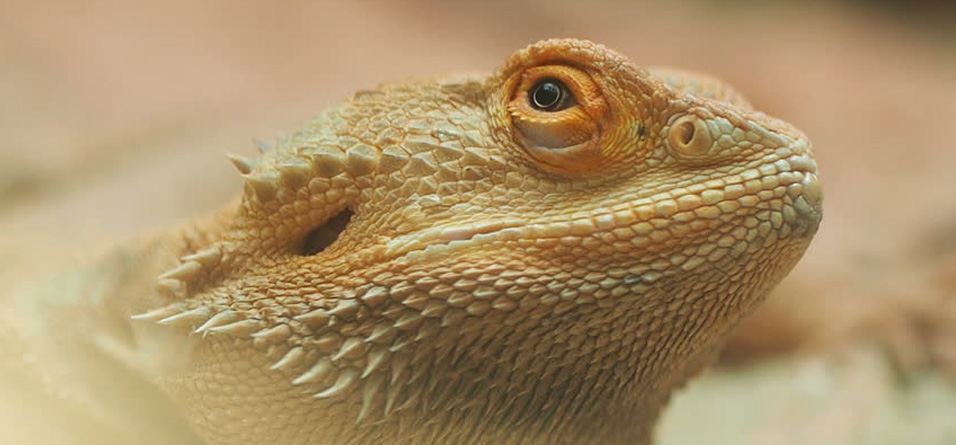
What do you need to know?
Start with the essentials. Practical guides to the topics bearded dragon keepers ask about most.
 OUR ANIMALS & THEIR STORIES
Every dragon has a story.
Jim, Ginger, Angel, Jessie and more. Meet our animals, see their photos and discover their stories.
Meet our animals ↗Guide to chovem
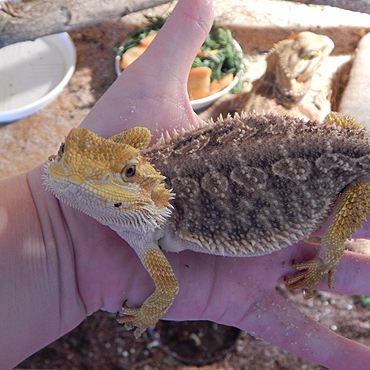
Choosing and buying a bearded dragon
Choose a healthy bearded dragon from a trustworthy breeder who can explain its origin, diet and husbandry. Observe its activity, condition, eyes, limbs and tail. Prepare a properly heated and illuminated terrarium before bringing it home. The original guide compares buying from a breeder and other options.
Read article →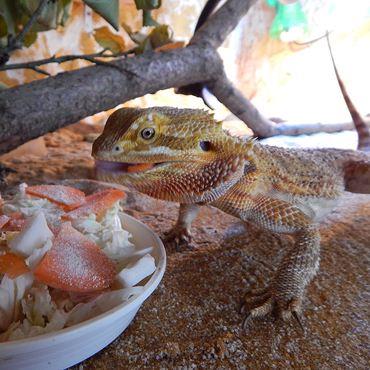
Feeding bearded dragons
Bearded dragons eat both invertebrates and plants. Young dragons consume more live insects; plant food becomes increasingly important as they grow. The original guide describes crickets, cockroaches and locusts as well as vegetables and suitable greens. Offer variety, avoid monotonous feeding and ensure access to fresh water and appropriate calcium and UVB. Adapt the diet to the animal’s age and condition.
Read article →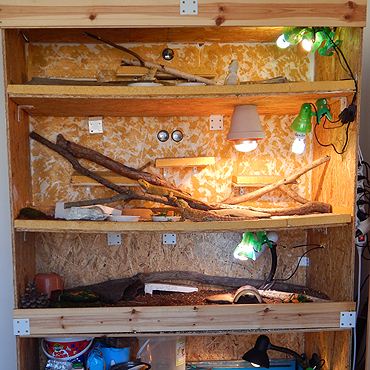
Terrarium for a bearded dragon
A bearded dragon needs a spacious, secure terrarium with a basking spot, cooler area, UVB lighting, suitable substrate and hiding places. The original guide discusses terrarium dimensions and equipment. Good ventilation, easy cleaning and regular checking of temperature and lighting are essential.
Read article →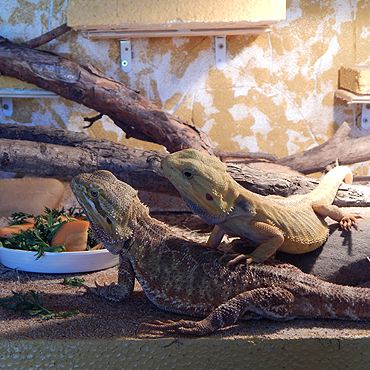
Breeding bearded dragons
The original article covers courtship, mating and responsible breeding of bearded dragons. Related animals should not be paired. Breeding females need careful nutrition, suitable conditions and a safe place to lay eggs. Plan ahead for the hatchlings and the care they will require.
Read article →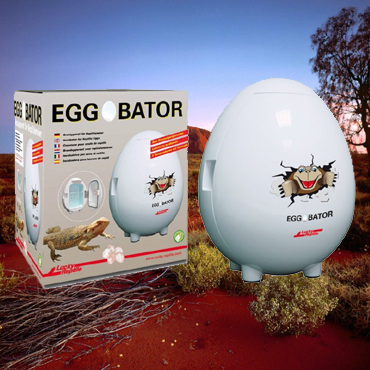
Eggs and incubator
Female bearded dragons can lay eggs, sometimes even without mating. The original guide describes egg laying, incubator preparation, humidity and the hatching process. Eggs are delicate and should be handled cautiously; successful incubation depends on stable conditions. Unexpected egg-laying problems require prompt veterinary attention.
Read article →
Illness in bearded dragons
Good housing and nutrition are the basis of prevention. Watch for changes in appetite, activity, posture, shedding, breathing and droppings. The original guide discusses common health concerns and warning signs. If your bearded dragon appears ill, contact a veterinarian experienced with reptiles; online advice does not replace an examination.
Read article →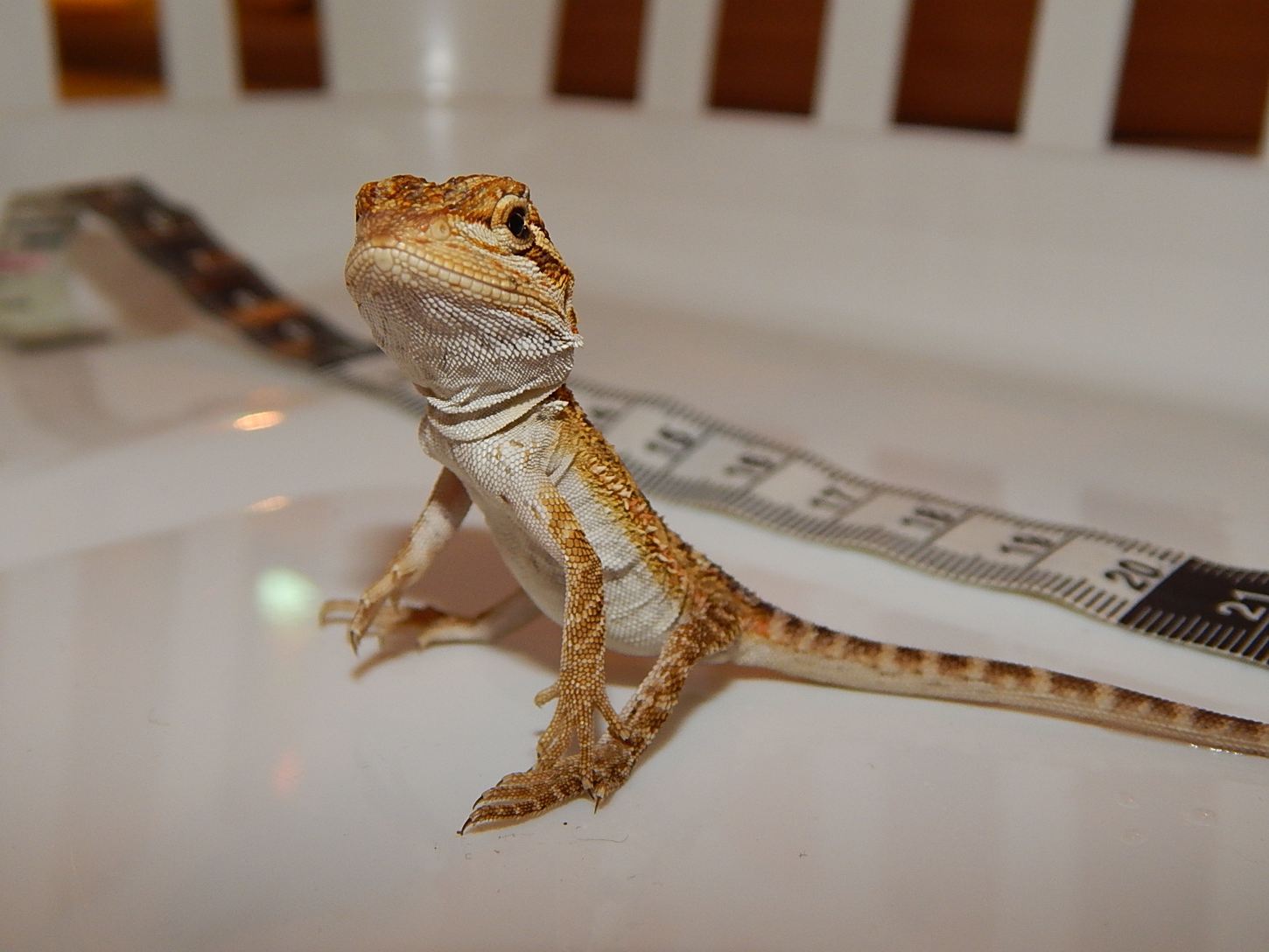

From the keeper's deníku

The boys are active after brumation
Jim and Luis woke from their seasonal rest and were active again, enjoying their food.
Read article →
New young dragons join our collection
We added some lovely young bearded dragons to the collection, hoping that they might have offspring when grown.
Read article →
Jim and a ladybird
A ladybird appeared among the freshly picked grass and dandelions and landed right near Jim's mouth.
Read article →These are archived news items; dates and offers may no longer be current.
From dragons to the farm.
Want to discover more animal stories? Find plenty of them at Farma Kapsa.